Tooth pain can be uncomfortable and distracting. Sometimes it may be caused by something minor, such as temporary sensitivity, while in other cases it can indicate a dental problem that needs professional attention.
Ignoring persistent tooth pain may allow an underlying problem to become more complicated. Understanding the possible causes can help you know when it is time to visit a dentist.
What Causes Tooth Pain?
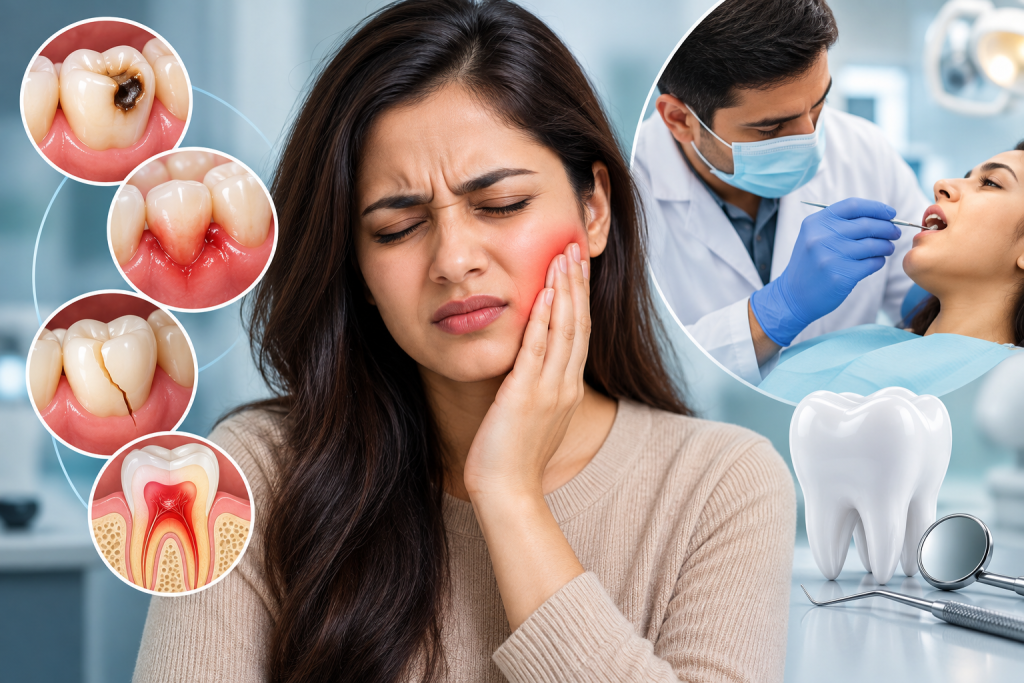
Tooth pain can have several causes. Some of the most common include cavities, tooth sensitivity, gum problems, cracked teeth, dental infections, and wisdom teeth.
The type and severity of pain can vary depending on the underlying cause.
- Dental Cavities
A cavity develops when the protective layer of a tooth is damaged by acids produced by bacteria. In the early stages, a cavity may not cause noticeable symptoms.
As it progresses, you may experience:
- Sensitivity to hot or cold foods
- Pain while eating sweets
- A visible hole or dark spot on the tooth
- Persistent toothache
Early dental evaluation can help identify cavities and determine the appropriate treatment.
- Tooth Sensitivity
If you experience a sharp sensation when consuming hot, cold, sweet, or acidic foods, you may have sensitive teeth.
Tooth sensitivity can occur when the protective enamel becomes thinner or when the tooth’s root becomes exposed. Aggressive brushing, gum recession, tooth wear, and other dental conditions can contribute to sensitivity.
If sensitivity continues or becomes worse, a dental examination can help identify the underlying cause.
- Gum Problems
Tooth pain or discomfort can sometimes be associated with gum problems.
Signs that may indicate a gum-related concern include:
- Bleeding while brushing
- Swollen or tender gums
- Persistent bad breath
- Gum recession
- Discomfort while chewing
Maintaining good oral hygiene and having regular professional dental checkups can help support healthy gums.
- Cracked or Damaged Teeth
A cracked or damaged tooth may cause pain when biting or chewing. Some cracks can be difficult to notice without a dental examination.
If you have injured a tooth or experience sudden pain while chewing, it is advisable to have the tooth examined by a dentist.
The appropriate treatment depends on the location and extent of the damage.
- Dental Infection
A dental infection can cause persistent or severe tooth pain. Other symptoms may include swelling around the tooth, sensitivity, difficulty chewing, or a bad taste in the mouth.
A dental infection should not be ignored. Professional evaluation is important to determine the cause and appropriate treatment.
In some cases, root canal treatment may be recommended to treat an infected or damaged tooth while preserving the natural tooth.
- Wisdom Teeth
Wisdom teeth can sometimes cause pain when they do not have enough space to grow properly.
You may experience:
- Pain at the back of the mouth
- Swollen gums
- Difficulty opening your mouth
- Discomfort while chewing
- Food getting trapped around the tooth
A dentist can examine the wisdom tooth and recommend the appropriate course of treatment.
When Should You See a Dentist for Tooth Pain?
Not every episode of tooth discomfort indicates a serious dental problem. However, you should consider scheduling a dental appointment if your pain:
- Continues for more than a day or two
- Keeps coming back
- Gets worse over time
- Is affecting your ability to eat or sleep
- Is accompanied by swelling
- Occurs with fever or other signs of infection
- Follows an injury or damaged tooth
Severe swelling, difficulty breathing or swallowing, or rapidly worsening symptoms require urgent medical or dental attention.
Can Tooth Pain Go Away on Its Own?
Sometimes mild tooth discomfort may temporarily disappear. However, the disappearance of pain does not necessarily mean that the underlying dental problem has been resolved.
For example, a cavity or dental infection can continue to progress even if symptoms temporarily improve.
That is why persistent or recurring tooth pain should be evaluated by a dental professional.
How Can You Prevent Tooth Pain?
Good daily oral hygiene can help reduce the risk of several common dental problems.
Simple habits include:
- Brush your teeth twice a day with fluoride toothpaste.
- Clean between your teeth regularly.
- Limit frequent consumption of sugary foods and drinks.
- Avoid using your teeth to open packages or bite hard objects.
- Schedule regular dental checkups.
- Have professional dental cleaning when recommended by your dentist.
- Seek professional advice when you notice changes in your teeth or gums.
Tooth Pain Treatment at Dr. Prapti Dental
At Dr. Prapti Dental Care and Implant Center in Gota, Ahmedabad, dental treatment is planned according to the individual’s oral health condition and treatment needs.
Depending on the cause of tooth pain, treatment may include restorative procedures, professional dental cleaning, root canal treatment, tooth extraction, or other appropriate dental care.
A dental examination is the first step toward understanding what is causing your pain and identifying the appropriate treatment.
Don’t Ignore Persistent Tooth Pain
Tooth pain is your body’s way of telling you that something may need attention. Instead of relying on temporary relief or delaying a dental visit, professional evaluation can help identify the cause and prevent the problem from becoming more complicated.
If you are experiencing persistent tooth pain or other dental concerns, consider scheduling a consultation with Dr. Prapti Dental Care and Implant Center in Gota, Ahmedabad.
Book your dental consultation today and get your tooth pain evaluated by a dental professional.